
What's in store - December 2025
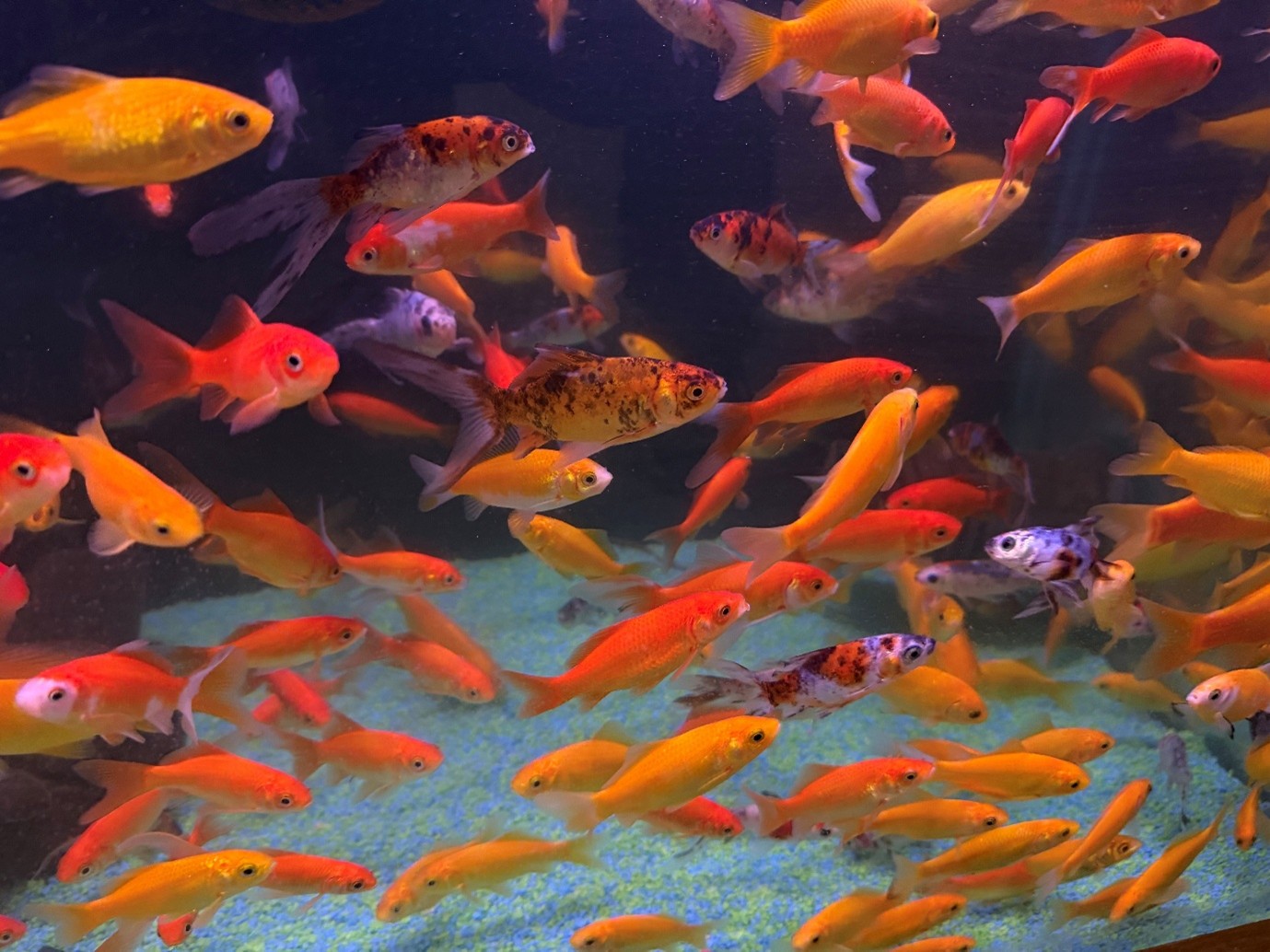
Some of our stores have brought their pond goldfish inside to escape the cold and it’s interesting to see the contrast between varieties brought about by a gene or two when viewed from the side in large numbers. Typically, they move into our sump tanks which are a key part of our systems, and these big tanks are in a loop which circulates around 4,000 litres of water on average and is serviced by commercial filtration and UV sterilisation. As the saying goes, don’t try this at home. Goldfish can make excellent aquarium fish but adults will need a tank that can comfortably accommodate a big, messy fish that should outlive a cat or a dog. That said, the advantage of keeping pond-hardy types is the fact that they can be moved into an outside pond permanently when they outgrow their aquarium. Far better options are available for small tanks in our temperate section.
https://www.fishkeeper.co.uk/fish/freshwater/pond-fish/goldfish-
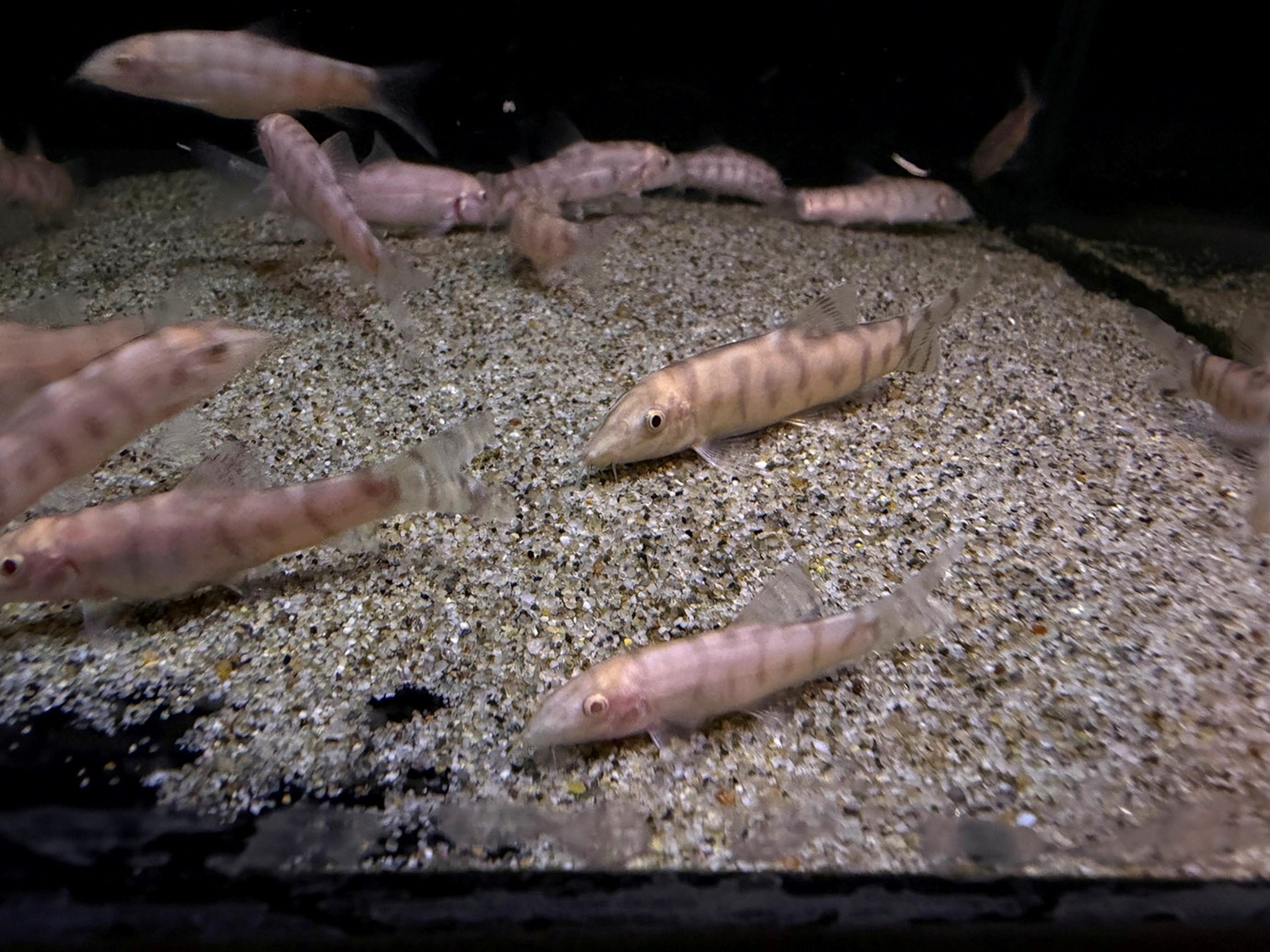
A new albino strain of a familiar fish has now appeared in our stores and it’s a favourite amongst fans of more feisty community fish. These Albino yoyo loaches (Botia almorhae) are robust snail-eating bottom dwellers perfect for keeping alongside barbs and larger tetras instead of easily bullied Corys and other fish that prefer the quiet life. Think of them like Tiger barbs that sink and you won’t go wrong, most people who keep them are struck by their abundant personality and can tell you that they’re often the first fish waiting for food when they see their owner. This batch were at our Swindon branch.
https://www.fishkeeper.co.uk/fish/freshwater/cyprinids/yo-yo-loach-pakistani-loach-
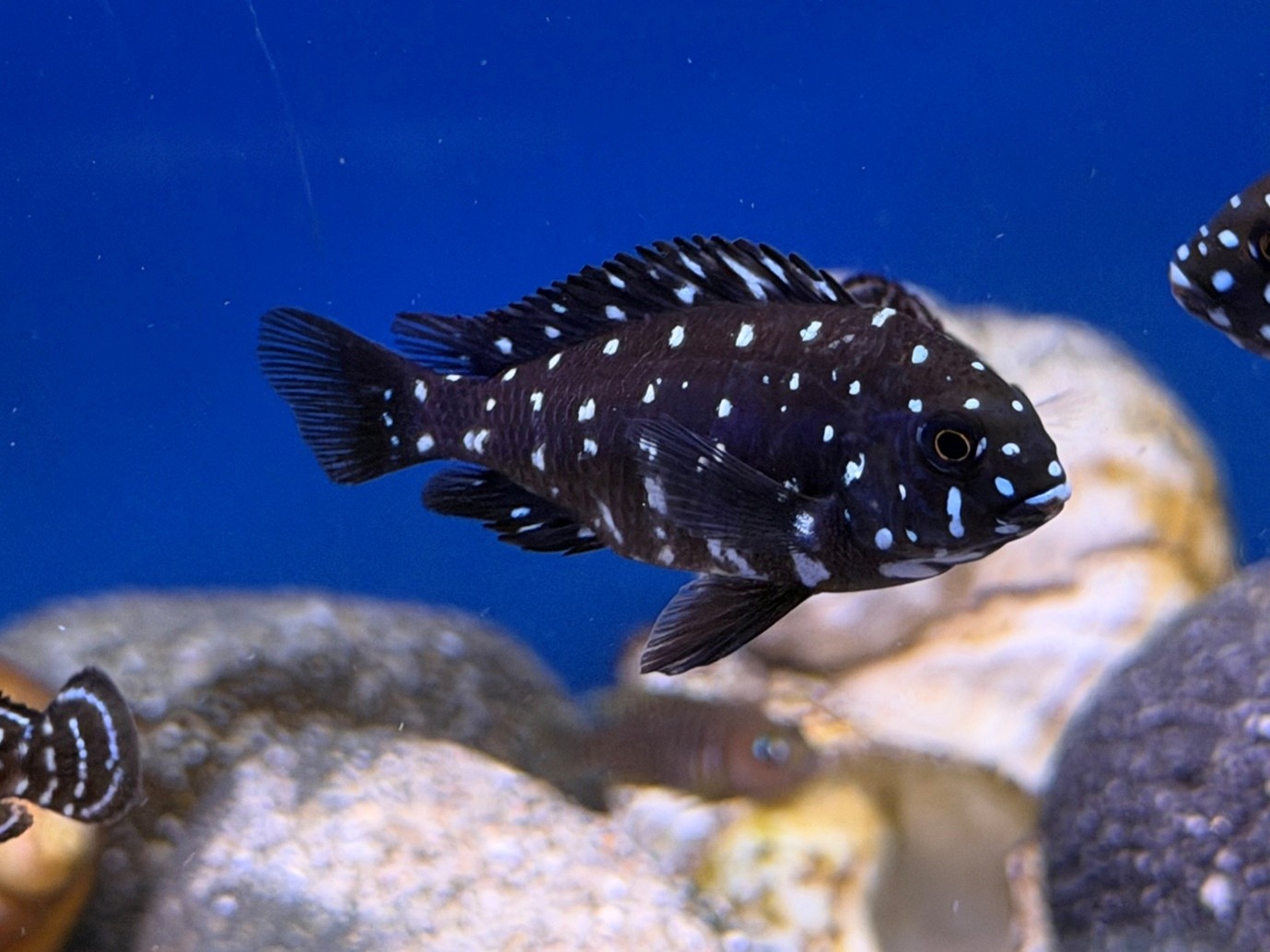
It may be a common colour scheme amongst many L number catfishes, but there was a time when black fish with white spots were rather rare amongst our wet pets. Young Tropheus duboisi are still as striking as they were then and these Tanganyikan cichlids are well worth the effort of catering to their requirements. Adults are black with a white bar and are best kept in large groups to spread aggression – these fish may not be predatory but they’re certainly not peaceful amongst themselves. Those rounded heads have evolved to scrape algae from solid surfaces and a large, well-maintained aquarium with hard, alkaline water is vital to keep them healthy. These were spotted at Reefkeeper Rugby.
https://www.fishkeeper.co.uk/fish/freshwater/cichlids/tropheus-duboisi
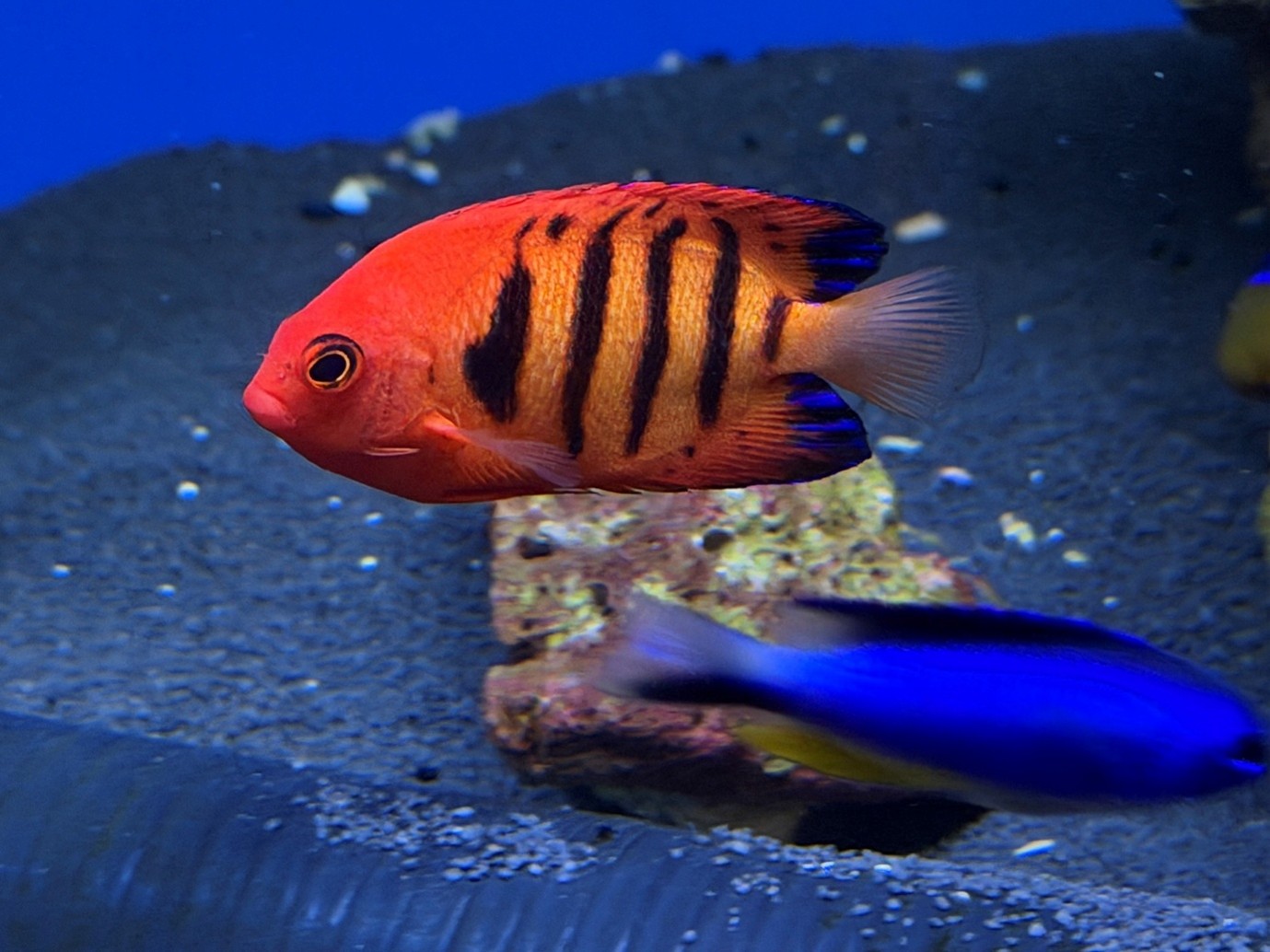
Some marine fish have always been a bit special, and the gorgeous Flame angelfish (Centropyge loriculus) is firmly on the list of species that you’d set up a marine tank just to house. For decades these nimble deep-reef dwarf angels were considered expensive and I’ve probably spent hours on the shop floor explaining why they were a premium fish. With the closing of Hawaii as a primary source, these exquisite fish are once again at a premium but remain an excellent investment for anyone who appreciates colour and character. This one was seen at our Lechlade store.
https://www.fishkeeper.co.uk/fish/marine/angelfish-dwarf-angelfish/flame-angelfish-
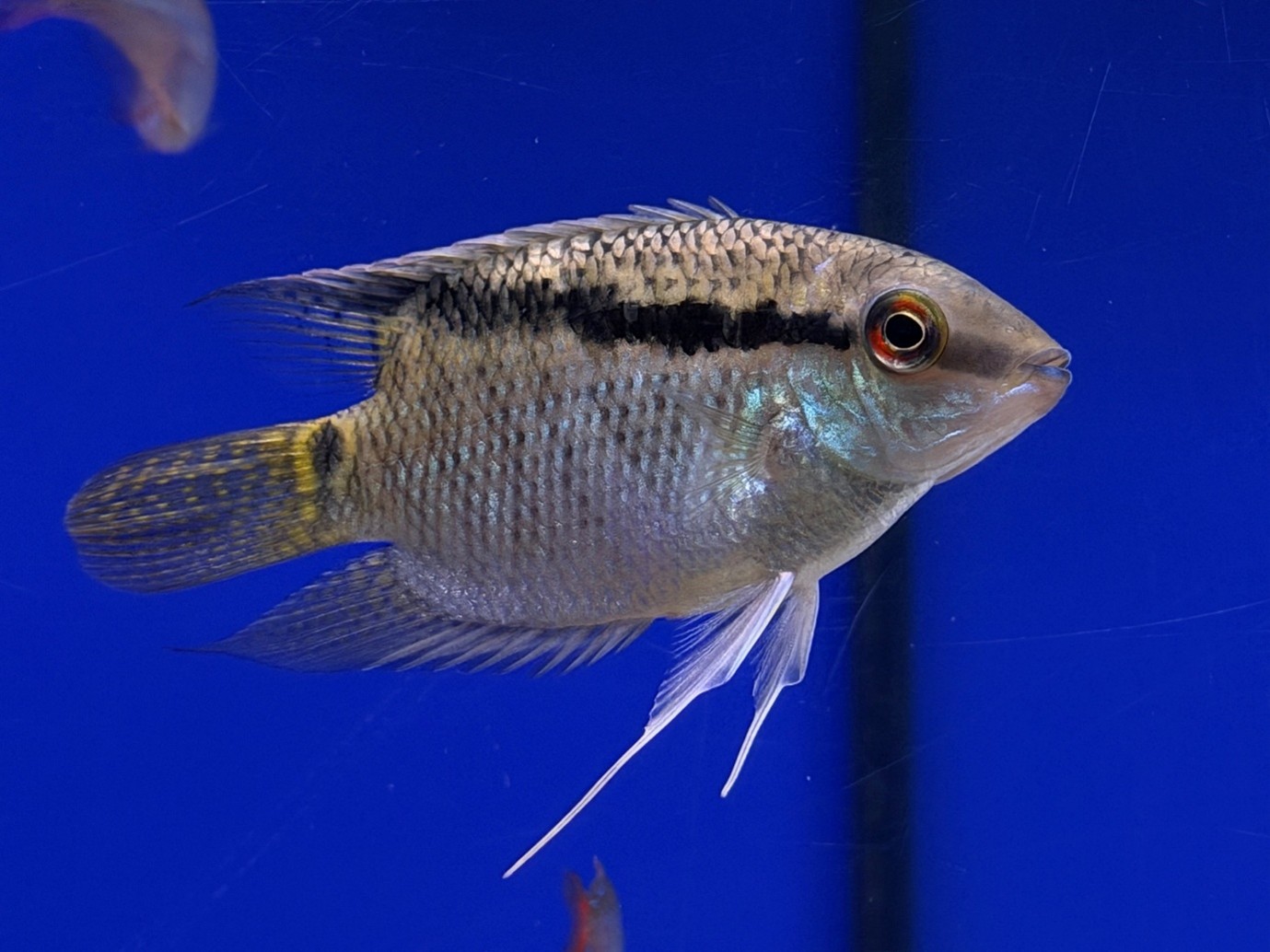
What better choice for the time of year than a Festive cichlid (Mesonauta festivus)? Although this wide-ranging Amazonian cichlid has now been identified as a number of different species which all have different areas of distribution within the catchment area. These are differentiated through body bars and fin markings and that’s a good reason not to cross different looking fishes in captivity to avoid producing hybrids. Festives are halfway between Angelfish (Pteropyllum) and Severums (Heros) in morphology and are very surface oriented, spending their time high in the water column and making good community fish for larger set ups. Like their angelfish cousins, festives will eat bite-sized tankmates if they’re able to corner them in a small tank. This batch were recently seen at our Cirencester store.
https://www.fishkeeper.co.uk/fish/freshwater/cichlids/festive-cichlid-


